Vegan Brownies Recipe: Keep the Formula Together
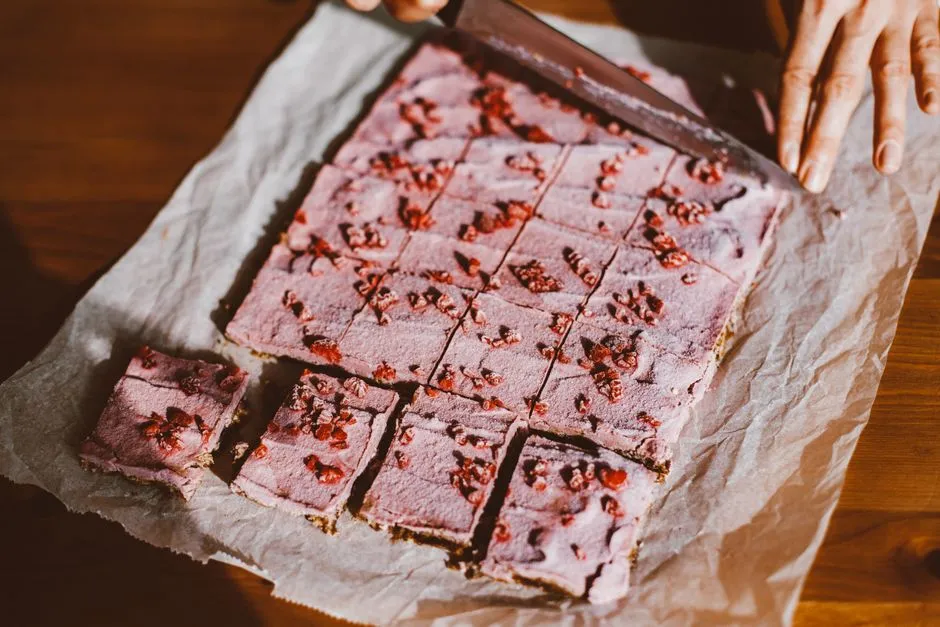
- Start with a whole recipe, not an egg substitution
- Which recipe should you follow?
- Why do the ingredients work as a system?
- How can you avoid using a divided ingredient twice?
- What should you look for during mixing and baking?
- What should you record instead of changing everything?
- What do labels and storage require?
- Frequently asked questions
- Sources
Start with a whole recipe, not an egg substitution
A fudgy vegan brownie needs a complete egg-free formula, accurate measurements, and thorough baking—not a deliberately raw centre. Keep the recipe's tin, ingredient types, and mixing order together, then allow proper cooling. Never taste raw flour or batter. Vegan is not allergen-free: check ingredients and cross-contact, and seek qualified advice for individual dietary needs. Refrigerate cooled leftovers promptly and follow current storage guidance.
This is a desk-researched cooking guide, not a Bristol Crumb kitchen test. The recipe below comes from a named primary publisher. Our contribution is the preparation record and decision checks around it: what to separate before mixing, what not to improvise, and what to record if the result differs from your expectation.
Which recipe should you follow?
Use the Great British Bake Off's vegan chocolate brownies, summarised here with its quantities unchanged.
Ingredients: 210g plain flour; 30g cocoa; 225g golden caster sugar; 75g dark muscovado sugar; 450g broken vegan dark chocolate; 360ml unsweetened almond milk; 120ml vegetable oil; 2 tsp vanilla extract; a large pinch of flaky salt.
Grease and base-line a 20×20cm tin. Preheat to 180°C conventional/160°C fan.
- Sift flour and cocoa; whisk in both sugars.
- In a saucepan over low heat, melt 300g chocolate with half the milk, all the oil, vanilla and salt, stirring occasionally.
- Whisk in the remaining milk; cool for 10 minutes.
- Whisk this into the dry mixture until smooth. Fold in the other 150g chocolate.
- Fill the tin. Bake 25–30 minutes, until firm.
- Cool completely in the tin. For the source's extra-fudgy option, refrigerate for 3–4 hours; cut into 16 squares and remove.
Use dry oven gloves and a stable heatproof landing surface for hot cookware. Avoid direct contact with hot chocolate, tins and oven surfaces. Follow appliance instructions. The firmness cue above is not an instruction to touch hot food with bare fingers.
Why do the ingredients work as a system?
The Texas A&M AgriLife ingredient-functions sheet describes flour as a source of structure through gluten or starch, sugar as a tenderiser as well as a sweetener, and oil as contributing moisture and tenderness. It identifies the molasses in brown sugar as contributing moisture and flavour.
Those general roles explain why changes deserve more thought than an ingredient's name suggests. Removing sugar is not merely turning down sweetness. Replacing flour is not merely changing colour. Changing fat is not merely choosing a different flavour.
Treat the published formula as one system. Do not add a generic egg-replacement mixture, extra raising agent, or extra liquid because another brownie recipe uses it. That would create an untested variation. The baking basics collection is the place for broader ingredient questions; this batch needs one consistent set of instructions.
How can you avoid using a divided ingredient twice?
Before heating anything, make an allocation sheet. Copy each ingredient's total into one column and each stage's share into another. Check that stage amounts add back to the total; do not treat a later “remaining” amount as an additional shopping quantity.
Here is a separate, fictional demonstration of the bookkeeping:
| Ingredient entry | First stage | Later stage | Total |
|---|---|---|---|
| Example chocolate allocation | 200g | 100g | 300g |
| Example liquid allocation | 125ml | 125ml | 250ml |
These numbers are not a second brownie recipe and must not replace the recipe above. They show the check: 200 + 100 = 300, while 125 + 125 = 250. Keep grams and millilitres in their own columns; adding them together would not give a valid batch mass.
Label the bowls by stage, then tick an amount only when it has entered the intended mixture. This simple record is especially helpful when another person is assisting.
What should you look for during mixing and baking?
Record whether the mixture is uniform before it enters the tin. If you notice a forgotten measured ingredient, return to the recipe and identify the omission rather than adding a guessed quantity to change the appearance.
Do not use a description such as “glossy” or “thick” as permission to alter the liquid balance. Ingredient temperature, product composition, and the stage at which a photograph was taken are not established by a picture alone.
Keep the full baking instruction, including its endpoint, beside the timer. The time range is not permission to remove an unfinished bake. Likewise, chilling is a later texture step, not a way to make uncooked flour safe.
The Food Standards Agency's flour guidance says uncooked flour can contain food-poisoning bacteria. Do not taste raw mix, and keep flour away from ready-to-eat food. Wash hands before and after handling it; clean bowls, utensils and work surfaces afterwards.
What should you record instead of changing everything?
Use a short batch record:
- Recipe link and date accessed.
- Ingredient product names and actual measured quantities.
- Tin dimensions and oven mode.
- Time placed in the oven and time removed.
- Whether the required endpoint was reached.
- Cooling and refrigeration times.
- Texture observed only after safe preparation and cooling.
This separates an execution difference from a preference. “I used another tin” is different from “I followed the stated format and would prefer a different style.” If you prefer a lighter cake, choose a different complete formula from cakes and traybakes, rather than repeatedly modifying this one without a record.
A tidy slice is also not proof of an unchanged recipe or safe handling. Keep appearance observations separate from food-safety decisions.
What do labels and storage require?
Plain wheat flour and almond milk make this unsuitable for someone who needs those ingredients excluded. Check chocolate, cocoa and every other package too. Government vegan-labelling guidance explains that cross-contamination can occur despite a vegan label. A dark colour or a high cocoa percentage does not establish allergy suitability.
For leftovers, this guide takes a conservative household route using FSA chilling guidance: cool and refrigerate within one to two hours, keep the fridge at 0–5°C, and use within 48 hours or freeze. This is not a validated room-temperature shelf life for this recipe. Follow stricter package instructions where applicable.
Label frozen portions; defrost in the fridge and use within 24 hours once fully defrosted. Freezing does not eliminate bacteria. Do not serve food whose safe handling is uncertain.
For another baking format, browse loaves and muffins, keeping that recipe's quantities and method separate.
Frequently asked questions
Do these brownies need a flax egg?
Do not add an extra binder to this formula. A recipe developed without eggs is not necessarily waiting for an egg replacement. Adding a seed gel changes the measured mixture. If you want to bake with flax specifically, choose a complete recipe developed around it rather than combining parts of two formulas.
Is a soft brownie centre safe to eat?
Softness is not a safety test. Flour-containing batter must be thoroughly baked, and cooling or refrigeration cannot replace that cooking step. Never taste a questionable centre to decide whether it is done. Follow the complete recipe's baking instructions; do not deliberately stop early because you want a fudgy result.
Can I make this recipe gluten-free or nut-free?
Not by assuming a single swap is equivalent. Read every ingredient and precautionary statement, consider preparation cross-contact, and choose a complete recipe suited to the required exclusion. Vegan does not establish allergy safety. If the eater's needs are uncertain, discuss them with the person and obtain appropriate professional dietary advice.
Can I use a different baking tin?
Use the specified format for the source recipe. A different base area changes the geometry of the same batch, and an area calculation does not supply a tested baking time. If the available tin differs, choose a published recipe for that tin rather than guessing a timing correction.
How should I keep leftover brownies?
For the conservative household storage approach here, cool and refrigerate within one to two hours, keep the fridge at 0–5°C, and eat within 48 hours or freeze. Follow any stricter ingredient instructions. Defrost frozen portions in the fridge and use within 24 hours once fully defrosted. Freezing does not kill all bacteria.